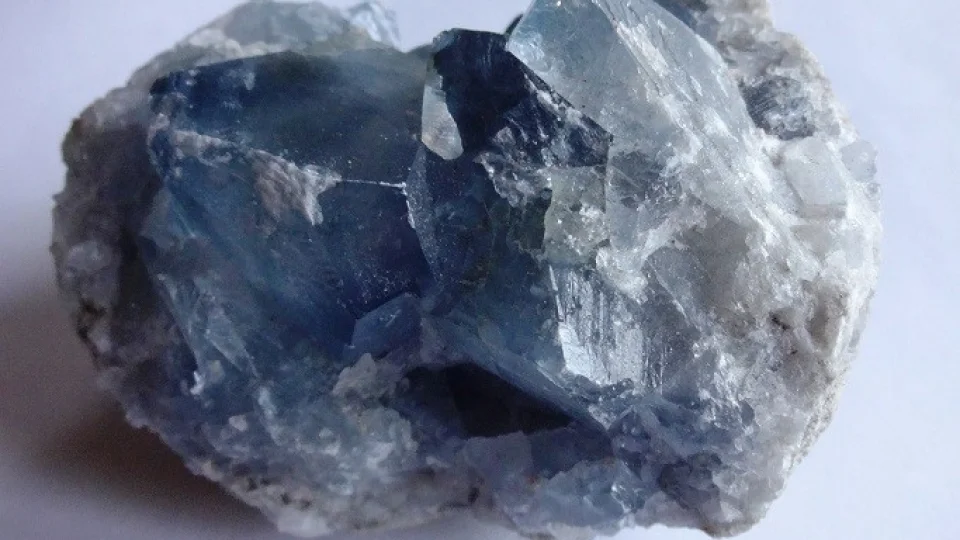
Cyprus stone is a mineral that stands out with its chemical composition and has a wide range of applications from industry to agriculture. Particularly known for its iron sulfate (FeSO4) formula, this material is commonly found in nature and plays a significant role in various industrial applications. Cyprus stone derives its name from the island of Cyprus, where rich reserves are located. One of the most notable features of this mineral is its ability to engage in various chemical reactions when interacting with water, contributing to the creation of nutrient-rich soils.
Cyprus stone stands out as an important source for plant nutrition and helps increase agricultural productivity. Additionally, it is used in environmental engineering for water purification and waste management. The FeSO4 compound serves as an important supplement for iron-deficient soils while also being utilized to enhance the sustainability of green spaces and agricultural areas.
The chemical formula of Cyprus stone is FeSO4, composed of iron (Fe) and sulfate (SO4) ions. This mineral participates in various oxidation states, allowing it to engage in many chemical reactions. The internal structure of Cyprus stone makes it an indispensable material in both industry and agriculture.
The areas where Cyprus stone is used are quite diverse. Its application as fertilizer in agriculture provides positive contributions to plant health; in water purification, it helps in the removal of pollutants. Additionally, the FeSO4 compound plays an important role in various chemical processes. Therefore, Cyprus stone holds great significance for both the environment and the economy.
In this article, you will find more information about the properties, uses, and chemical structure of Cyprus stone, and you will discover the benefits of this important mineral.
Cyprus stone is a compound with the chemical formula FeSO4. It is commonly known as ferrous sulfate and is a naturally occurring mineral. Cyprus stone is particularly notable for its various applications in agriculture, construction, and industry. In agriculture, it is used as a plant nutrient; it plays an important role in lowering soil pH and meeting the iron needs of plants. Additionally, it is used in water purification processes for flocculation purposes.
To examine the applications of Cyprus stone in more detail:
Ferrous sulfate is also an important component for various reactions in laboratory settings. Regarding the oxidation state, Fe2+ ions affect the solubility properties of ferrous sulfate, which plays a critical role in many chemical processes. Cyprus stone has a wide range of applications in different areas of industry, particularly in metal processing and pigment production. Therefore, the processing and use of Cyprus stone is an important issue from both environmental and economic perspectives.
Cyprus stone is a natural mineral form of iron sulfate with the chemical formula FeSO4. It is typically found in a crystalline structure and can vary in shades from light green to white or yellow. Cyprus stone holds significant importance, especially in the agricultural sector. It is used as a soil conditioner and fertilizer, while also playing an effective role in water purification processes. The iron content of this mineral helps in the growth of plants, while sulfate can assist in balancing soil pH.
The use of Cyprus stone is not limited to agriculture. It is also utilized in water treatment systems for the flocculation process. This process helps to agglomerate suspended solids and pollutants present in water, making it cleaner. Additionally, it serves as an important component in the production of various chemicals in the industrial sector. The diverse applications of Cyprus stone demonstrate that it is a versatile mineral.
FeSO4, also known as iron (II) sulfate, with the chemical formula FeSO4, is an important compound referred to as Cyprus stone. This compound, typically found in the form of green crystals, is commonly found among minerals in nature.
Another important feature of the FeSO4 compound is its oxidation state. The iron atom in the compound has a +2 oxidation state. This allows iron to assume different roles in chemical reactions. For example, FeSO4 can assist in the transition of iron ions to a +3 oxidation state during oxidation processes.
The FeSO4 compound is also used in laboratories and various industrial processes for the extraction of other metals such as copper and zinc. In this context, the FeSO4 compound is critically important not only in agriculture and health but also in industry and environmental protection. Cyprus stone, due to its versatility, contributes to both the efficient use of natural resources and human health.
Cyprus stone is a natural mineral compound that typically has the formula iron(II) sulfate (FeSO4). This stone is used across a wide range of applications, from industrial processes to agricultural uses. One of the most well-known properties of Cyprus stone is its ability to engage in various chemical reactions when it interacts with water. Thanks to these properties, it has become an indispensable material in both agriculture and the construction industry.
Cyprus stone is particularly used in the agricultural sector to balance the pH level of the soil. By reducing the acidic nature of the soil, it allows plants to grow more healthily. Additionally, due to its iron content, it plays an important role in the development of plants. The iron necessary for plants helps prevent diseases such as chlorosis.
In the construction industry, Cyprus stone is often preferred in the production of materials with low water permeability. By using Cyprus stone in concrete production, more durable and long-lasting structures can be created. Furthermore, it contributes to sustainable construction projects by being used in conjunction with recycled materials to reduce environmental impacts.
The applications of Cyprus stone in different sectors are not limited to these. For example, it also plays a significant role in water purification. Iron(II) sulfate is used as a coagulation agent in the process of removing pollutants from water. This way, water quality is improved, and cleaner water usage is ensured in various industrial processes.
Cyprus stone is a compound with the chemical formula FeSO4, commonly referred to as iron(II) sulfate. It is typically found in nature in crystal form and is usually seen in white, green, or yellowish colors. Cyprus stone has a wide range of applications in both industrial and agricultural fields. This compound plays a significant role, especially in fertilizer production, water treatment processes, and the chemical industry.
What is Cyprus Stone Used For?
FeSO4 is an important compound in terms of oxidation states. Iron(II) ions can easily convert to iron(III) ions during oxidation processes. This property allows Cyprus stone to be used in many industrial applications. For example, using this compound in iron-deficient soils helps plants develop healthily. This aspect of Cyprus stone is critical for increasing productivity in agriculture.
Information About FeSO4 and Its Compounds
FeSO4 contributes to the formation of different compounds by interacting with various components. For instance, when it reacts with acids, it can create various salts and complex compounds. Therefore, Cyprus stone has become a frequently preferred substance in chemical research and experimental studies.
